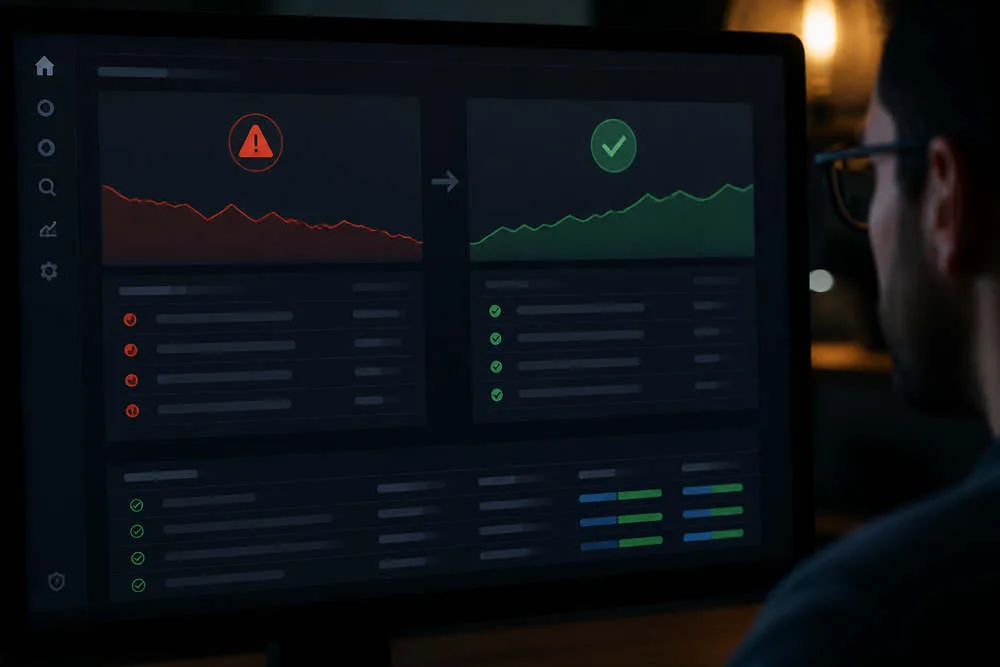
Some websites block AI crawlers without anyone meaning to. A single line in a configuration file, a hosting security setting applied by default, or a robots.txt entry left over from a previous developer can quietly tell ChatGPT, Gemini, and Perplexity to stay out. The AI platforms respect that instruction and never read the site. If they cannot read it, they cannot recommend it, no matter how good the content is. REK Marketing and Design checks this in every audit, and it is one of the most common fixable reasons a business does not show up in AI search. Request your free audit from REK Marketing and Design or call (407) 500-0102 to find out if your site has this problem.
How this happens without anyone noticing
Businesses near the SoDo district in Orlando often went through a website build or redesign in the past few years, sometimes with multiple developers or agencies involved. Each one may have adjusted technical settings, added security plugins, or applied firewall rules without documenting every change. A "block unknown bots" rule that made sense for spam protection can catch GPTBot and ClaudeBot in the same net. The site owner has no idea. Google still crawls fine because its crawler is on every allow-list. But the AI-specific crawlers, which run on separate identifiers, get turned away silently every time they try to visit.
A retailer in the Milk District, for example, might rank on the first page of Google for its category and still be completely absent from AI recommendations, not because the content is weak, but because the technical gate is closed. That gap matters more every month. Buyers are increasingly starting with AI assistants rather than search engines, especially for service and local business queries. Ranking on Google is still valuable. It is no longer the whole picture.
The businesses doing well near the Dr. Phillips area in terms of AI visibility tend to share one thing: someone checked the access settings and made sure AI crawlers are explicitly permitted. That is often the starting point, and the fix itself is straightforward once the problem is identified.
What AI crawlers are looking for once they get in
Crawler access is the prerequisite. Content quality is what determines whether the visit turns into a recommendation. AI platforms are looking for pages that answer questions clearly, reflect real expertise, and are structured so the content can be parsed and categorized accurately. Schema markup helps. Clean heading structure helps. Thin pages, duplicate content copied from other sites, and vague service descriptions that could describe any competitor in the market do not earn citations regardless of how accessible the site is.
This is where AI-Powered SEO and good Web design work together. A site built with clean architecture, fast load times, and structured data gives AI crawlers an easier time reading and categorizing the content. A site built for aesthetics without technical foundations may look polished and still be functionally invisible to AI systems.
Off-page citations complete the picture
Even a technically perfect site with excellent content will struggle to earn AI recommendations if nothing else on the web points to it. AI tools do not operate in isolation. They cross-reference. A business that appears in its Google Business Profile, a few industry directories, and at least some third-party coverage looks credible in a way a standalone website does not. That pattern of external references is what SEO Services build over time, and it compounds. Each new citation adds to a body of evidence that the business is real, active, and worth mentioning.
The three things an audit surfaces are almost always the same: crawler access, content structure, and off-page authority. Occasionally it is one problem in isolation. More often it is a combination, with the crawler setting being the one nobody thought to check.
What you can do right now
If you have access to your site's robots.txt file, you can look for lines that reference GPTBot, ClaudeBot, or PerplexityBot and check whether they are set to "Disallow." If they are, that is your answer. If the file is blank or inaccessible, that points to a hosting or plugin-level setting that needs a closer look. Either way, the fix is technical and usually fast once the right person knows where to look.
The harder questions, what your content is doing once crawlers get in, and whether your off-page presence is strong enough to support AI recommendations, take more digging. That is what the audit is for. Call (407) 500-0102 or schedule your free site audit with REK Marketing and Design and get a concrete answer on all three fronts.