
Our original email was completely focused on our company and the services that we provide. That is a line our owner, David Lertola, gave to MarketingSherpa for a feature on why some marketing claims get believed and others get ignored, and it names the quiet mistake sitting on most small business websites. So what does a prospect actually need to see before they pick up the phone? Two things, in this order: proof that you understand the problem they walked in with, and proof that you can fix it. Everything else on the page is decoration. At REK Marketing and Design we rebuild sites around those two beliefs, so if yours is pulling in visitors who read a little and leave, tell us what is happening or call (407) 500-0102.
What Does a Prospect Have to Believe Before They Call You?
Two things, and neither one is about how long you have been in business. A visitor has to believe they genuinely have the problem you solve, and then believe you are the one who can solve it. Both beliefs start at zero. Nobody lands on your site ready to trust you, because the last five sites they opened all said the same confident things about themselves. So when your homepage opens with "we are a full-service agency with years of experience and a passion for results," you are answering a question the visitor never asked. They are not thinking about you yet. They are thinking about the phone that stopped ringing, the calendar with gaps in it, the ranking that slid last month. We read client homepages every week that spend their most valuable space, the first screen, talking inward. The prospect skims it, decides it is about you and not about them, and closes the tab. The believing never got a chance to start.
Why Does Writing About Your Customer Beat Writing About Yourself?
Because the customer only cares about their own situation, and copy that starts there earns trust that copy about you has to beg for. We learned this on our own funnel, not in a book. Our original follow-up email to a new lead was all about us, our team, and the services we offer. We rewrote it so the audit we send focuses almost entirely on the customer's own account, their website, and their digital footprint. The services we provide did not change. The only difference is that we got specific about what work we would be doing for that one business. Our conversion rate on those organic leads went from 12.8 percent to 31.25 percent. Same offer, same company, same price. The subject just moved from us to them. That is the whole lesson, and it applies to every page on your site. Good web design puts the visitor's problem on the screen before it ever puts your logo there.
What Kind of Proof Makes a Claim Believable?
Proof a stranger can check, sized to match the claim you are making. Small claims need almost nothing. If you say you answer the phone, the visitor will believe you, because it costs you nothing to say and nothing to doubt. Big claims are where sites lose people. "We doubled their leads" is worth reading only if a number, a name, a date, or a screenshot sits right next to it. Without that, it reads like every other site, which is to say it reads like nothing. The words that do the most damage are the ones owners love most: best, leading, trusted, premier. Anyone can type them, so they prove the opposite of what they claim. Swap each adjective for a piece of evidence. Replace "trusted" with the review count. Replace "proven" with the before-and-after. Replace "results driven" with one client's actual result and their name under it. Evidence is just a claim that brought its receipts.
How Can You Tell If Your Website Has a Credibility Gap?
Read your own homepage as a stranger who has never heard of you, and count. In the first screen, how many sentences are about the visitor's problem versus how many are about your company? If the tally runs heavily toward we, our, and us, that is the gap, and it is costing you calls you never see. The second test is the claim-to-proof check: for every strong statement on the page, is there something nearby a skeptic could verify? Most owners cannot run these two tests on their own site, because they are too close to it and they already know they are good at the work. That is the part we do for free. Our SEO and site audit reads your pages the way a cold prospect does and shows you exactly where the trust breaks down before the call ever happens.
If your site gets found but the phone stays quiet, the problem is usually not traffic, it is trust. That is the gap we close. Call REK Marketing and Design at (407) 500-0102 or send us a note through our contact page, and we will walk your site together and show you what a prospect sees before they decide to call.
Keep reading
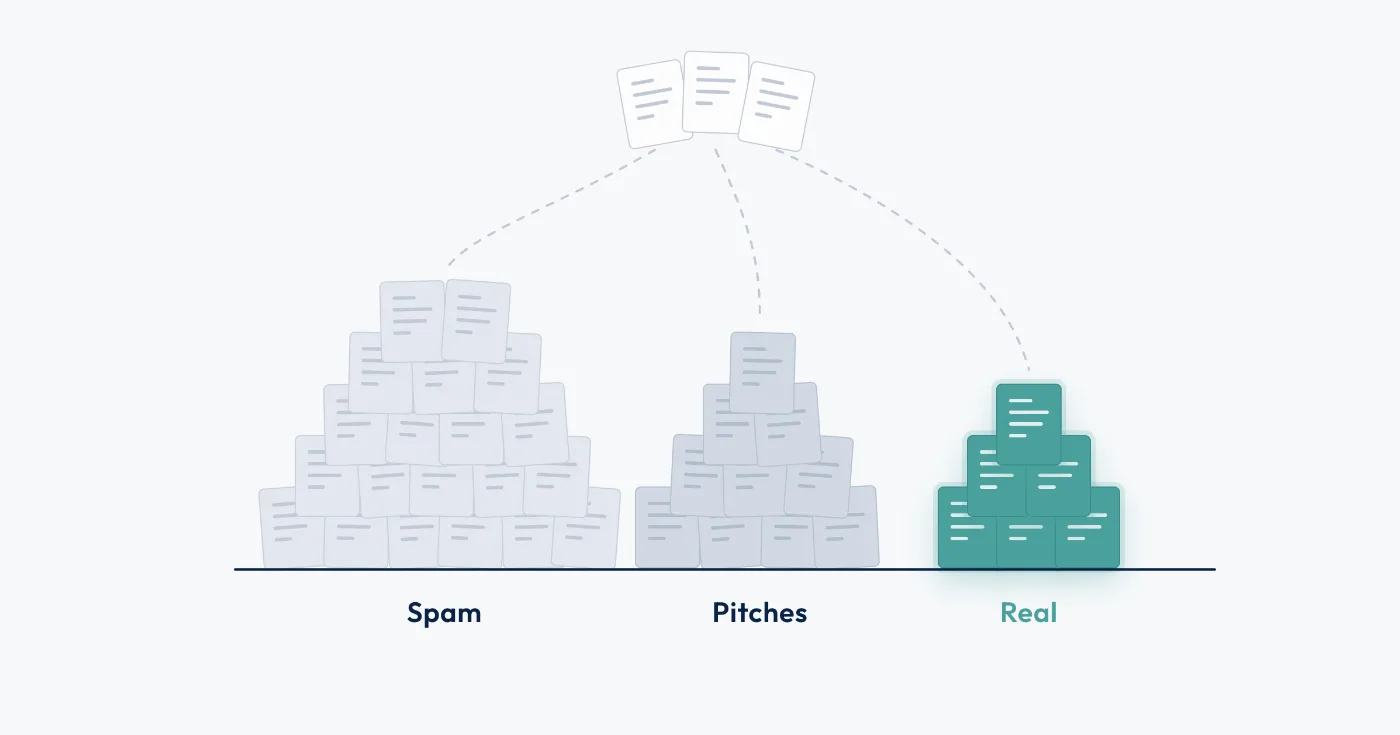
Only 1 in 8 Website Form Fills Was a Real Customer. Here Is How to Count Your Leads Honestly
We read all 508 form submissions our website received over eleven months. Only 63 were real potential customers. Here is what the rest were, and how to count yours honestly.